



WHY MALARIA KEEPS COMING BACK: 7 POSSIBLE REASONS
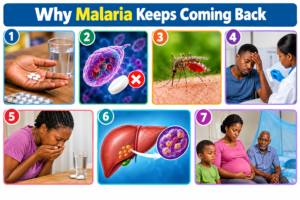
When people say “malaria keeps coming back,” it can mean either that the original infection was never completely cleared (treatment failure/recurrence) or that the person keeps getting new infections. Here are seven detailed reasons:
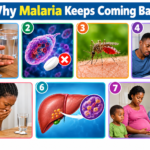
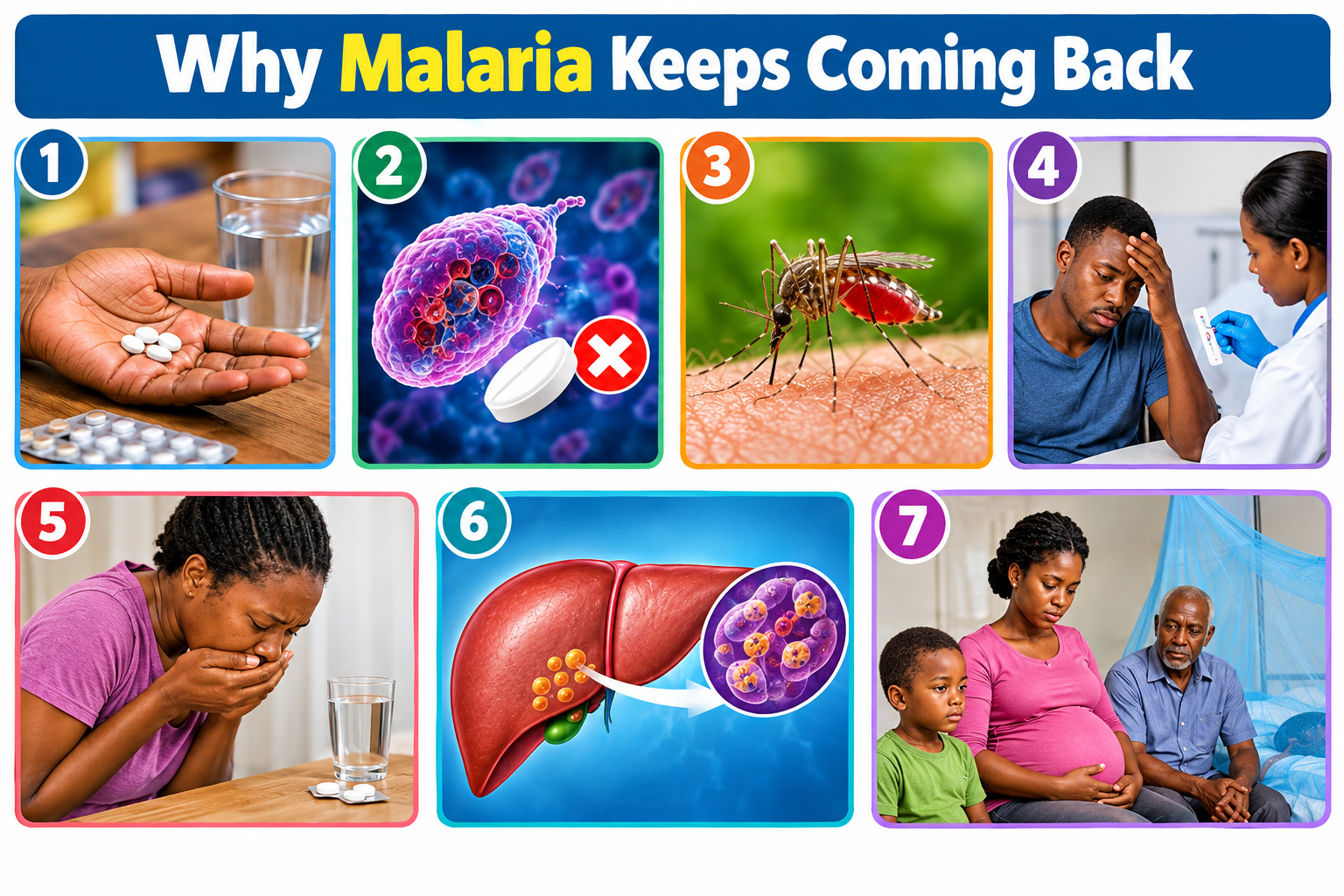
1. The malaria treatment was not completed
Stopping antimalarial medication as soon as the fever improves can leave some parasites alive in the blood. Those remaining parasites can multiply again, causing symptoms to return days or weeks later. Missing doses or taking the medicine inconsistently can have a similar effect.
2. The malaria parasite may be resistant to the medicine
Malaria parasites can develop resistance to certain antimalarial drugs. If the parasite is not adequately killed by the medication, the illness may return after treatment. This is one reason treatment should follow the recommended national guidelines rather than relying on leftover medicines or repeatedly using the same drug without testing.
3. You may have been infected again by another mosquito bite
A person can successfully recover from malaria and then become infected again soon afterward. Treatment does not provide permanent protection against new malaria infections. In malaria-endemic areas, repeated exposure to infected Anopheles mosquitoes can therefore make it appear that malaria is “coming back.”
4. The illness may not actually be malaria
Fever, headache, chills, weakness and body aches can occur with many other illnesses. If a person assumes every episode of fever is malaria and repeatedly takes antimalarial drugs without testing, the actual cause may be missed. Depending on the circumstances, infections such as typhoid, urinary or respiratory infections, or other febrile illnesses may be responsible.
5. The medicine may not have been properly absorbed
Vomiting soon after taking an antimalarial medicine can prevent enough of the drug from being absorbed. Severe diarrhoea or other problems affecting absorption may also interfere with treatment. If this happens, the parasite may survive despite the person apparently taking the correct medication.
6. Some malaria parasites can remain dormant in the liver
Certain species, particularly Plasmodium vivax and Plasmodium ovale, can form dormant liver stages called hypnozoites. These can reactivate weeks or months after the initial illness and cause another episode, known as a relapse. This is different from simply being bitten by another infected mosquito.
7. Factors affecting the person’s immunity or health can increase recurrence
People who have limited immunity to malaria, especially those living in areas with ongoing transmission, may experience repeated infections. Young children, pregnant women and people with certain health conditions can be particularly vulnerable to malaria complications. In addition, inadequate protection against mosquito bites—such as inconsistent use of insecticide-treated bed nets—can increase the likelihood of repeated infections.
ADDITIONAL INFORMATION
Repeated fever should not automatically be assumed to be recurrent malaria. Ideally, malaria should be confirmed with a diagnostic test when possible before starting another treatment. If malaria is repeatedly confirmed despite appropriate treatment, a healthcare professional should investigate whether this represents treatment failure, reinfection, relapse, or another underlying problem.






Post Comment